Known Issues
- Bias drift in aging units with worn adjustment hardware.
- Thermal interface material degradation over decades.
- Occasional offset instability from aged small-signal components.
Site Under Construction
We are actively building and verifying model data, manuals, and market-watch features. Thank you for your feedback while this archive grows.
Product Archive
Core M-series two-channel amplifier platform with well-documented owner manual and strong enthusiast restoration interest.
Category
Amplifier
Series
M Series
Era
1992-1995 (archived FAQ/manual sources)
Main power reservoir capacitor (4700uF / 50V class)
Original: 4700uF 50V radial electrolytic (legacy OEM variant)
Replacement: 105C low-ESR radial capacitor, matched lead spacing
Verification: Community Verified
Bias / offset adjustment trimmer
Original: Single-turn open trimmer, value depends on board revision
Replacement: Sealed multi-turn cermet trimmer
Verification: Needs Revision Check
Dual op-amp for preamp / crossover stage
Original: Legacy dual DIP-8 op-amp (marking varies by production run)
Replacement: Low-noise audio op-amp DIP-8
Verification: Proposed
4700uF 50V low-ESR radial capacitor
DigiKey: P12345-ND
Placeholder DigiKey reference. Confirm ripple current, lead spacing, and can diameter against board footprint before finalizing.
Open DigiKey referenceSealed multi-turn trimmer
DigiKey: P34567-ND
Placeholder DigiKey reference. Confirm orientation and adjustment direction against original layout.
Open DigiKey referenceAudio-grade dual op-amp replacement
DigiKey: P23456-ND
Placeholder DigiKey reference. Verify stability and compensation in original circuit before bulk install.
Open DigiKey referenceStep-by-step process to stabilize idle current and validate DC offset behavior on M-series boards.
Template process for hum, hiss, and channel imbalance root-cause analysis before replacing semiconductors.
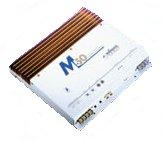
M50 amplifier photo
Archived M50 product photo from Phoenix Gold FAQ M Amplifiers page.
M50 manual cover
Owner-manual cover extracted from archived PDF for visual identification and layout reference.
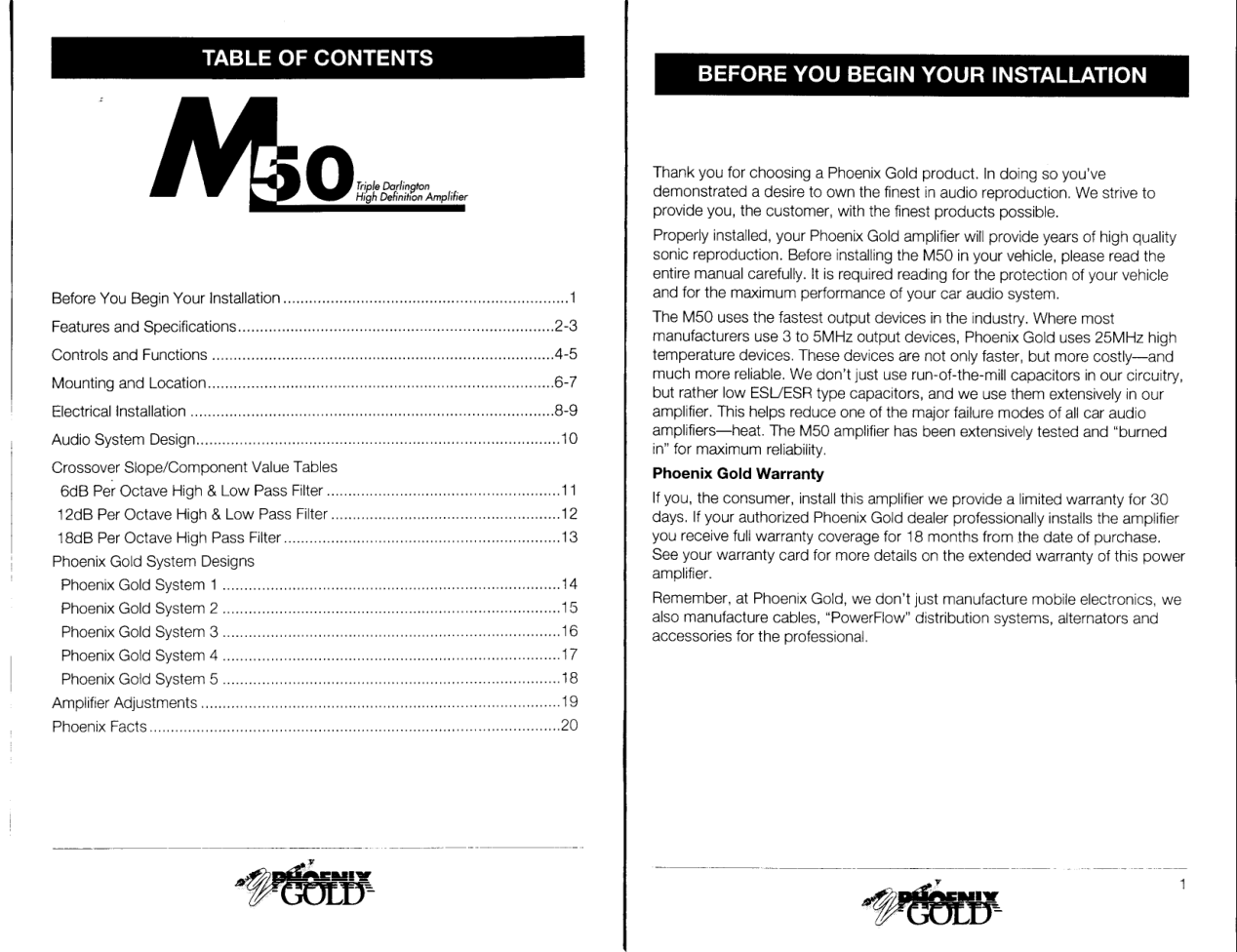
M50 manual page 2
Manual interior page used as technical and historical reference material.
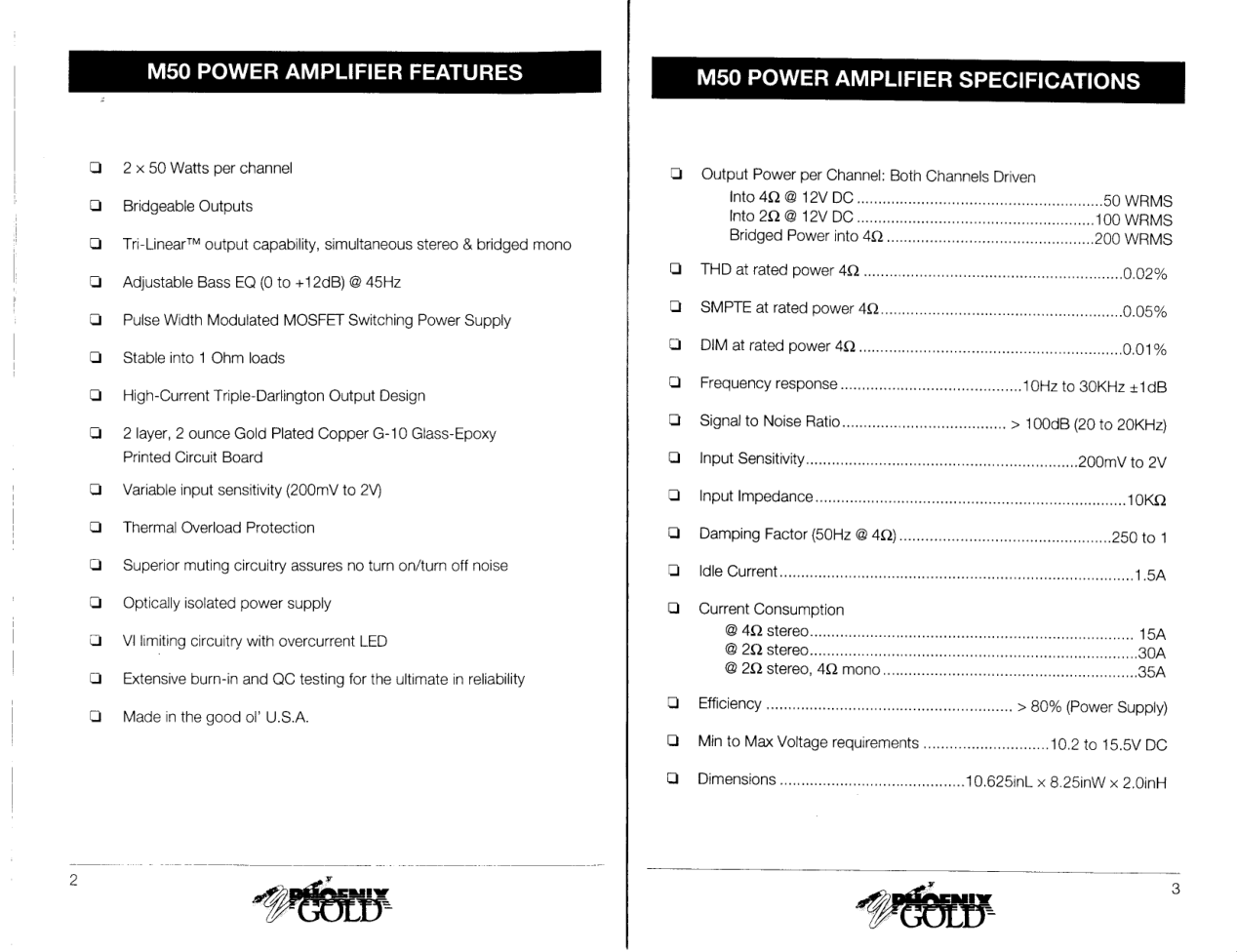
M50 manual page 3
Additional manual page for control labels, tables, and period styling details.
Early Phoenix Gold and M-Series Emergence
Archived Phoenix FAQ material lists M-series output tables and identifies a 1992-1995 production window, while secondary history notes describe the broader late-1980s to early-1990s brand ramp.
M-Series archived FAQ specs and timeline
Cross-checkedSource: Archived Phoenix Gold FAQ - M Amplifiers
Open source pageM-Series models with archived owner manuals
Cross-checkedSource: Phoenix Phorum Manual Archive - M Amps
Open source pagePhoenix Gold early brand and amplifier timeline
Imported - Needs Primary VerificationSource: Phoenix Gold Registry - History
Open source pageOutlaw and Bandit relationship
Imported - Needs Primary VerificationSource: Phoenix Gold Registry - Outlaw/Bandit
Open source pageArchived Phoenix Gold FAQ - M Amplifiers
Primary source used for M50 spec table values and product photo.
Open sourceM50 Owner Manual
Primary manual source used for electrical specs and control-function verification.
Open sourceM-Series Manual Index
Directory listing confirms archived M-series documentation.
Open sourceRepair and calibration information is provided at user's own risk. Verify all procedures before applying power.